Acne Scarring: Discover Treatments to Help Restore Smoother, Healthier-Looking Skin
Acne can be frustrating enough while it is happening, but for many people the problem doesn’t end when the spots disappear. The marks and scars left behind can remain for months or even years, affecting the appearance of the skin and, for some, their confidence.
Whether you have noticed small indentations, uneven skin texture, enlarged-looking pores or stubborn marks following breakouts, acne scarring is a common concern. Fortunately, advances in aesthetic treatments mean there are now several ways to improve the appearance of acne-damaged skin.
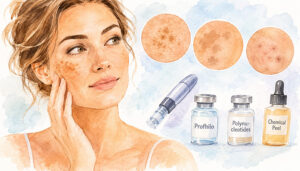
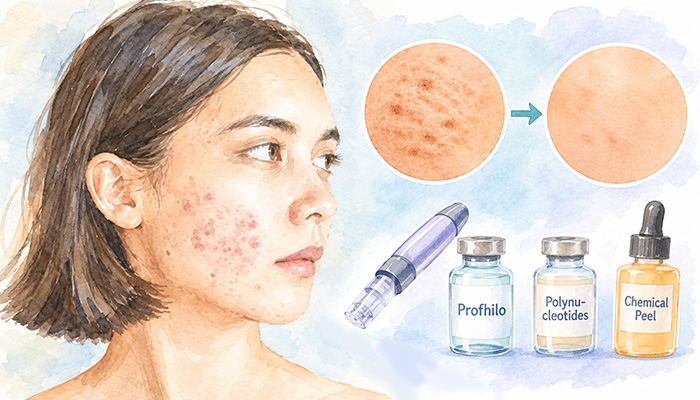
At Araya Skin Clinic, treatments such as microneedling, Profhilo, polynucleotides and professional chemical peels can help address different aspects of skin damage and rejuvenation.
But what causes acne scars, and which treatments might be right for you?
What causes acne scarring?
Acne scarring occurs when inflammation associated with acne damages the deeper layers of the skin. As the skin heals, it may produce too little or too much collagen, resulting in changes to its surface and texture.
Not everyone who experiences acne will develop scars. However, the risk is greater with severe or persistent acne, particularly deep, inflamed spots and cysts.
Picking, squeezing or scratching spots can also increase the likelihood of scarring.
There are several different types of acne scarring, each with its own characteristics.
1. Atrophic acne scars (indented scars)
These are the most common types of acne scars. They develop when insufficient collagen is produced during the healing process, leaving small depressions or indentations in the skin.
There are three main varieties:
- Ice pick scars: Small, narrow and deep indentations that resemble tiny puncture marks.
- Boxcar scars: Wider depressions with relatively sharp, defined edges, often found on the cheeks and temples.
- Rolling scars: Wider, shallow depressions that create an uneven, wave-like appearance across the skin.
These scars can be particularly noticeable in certain lighting conditions, as the indentations create shadows across the face.
2. Hypertrophic and raised scars
Unlike indented scars, hypertrophic scars develop when the skin produces too much collagen during healing.
This results in raised, firm areas of scar tissue that remain within the boundaries of the original acne lesion.
In some cases, particularly on the jawline, chest or back, acne can also cause keloid scars. These extend beyond the original area of injury and may require specialist assessment.
3. Post-inflammatory hyperpigmentation (PIH)
Sometimes what appears to be acne scarring is actually pigmentation left behind after a breakout.
Post-inflammatory hyperpigmentation occurs when inflammation stimulates excess melanin production, leaving flat brown, grey or darker marks on the skin.
Unlike true acne scars, these marks do not cause indentations or changes in skin texture.
They are particularly common in people with darker skin tones and can take several months to fade.
Understanding the difference between pigmentation and actual scarring is important because the treatments required can be quite different.
Which treatments can help improve acne scarring?
There is no single treatment that works for every type of acne scar. The best approach depends on the depth and type of scarring, your skin condition and the results you hope to achieve.
At Araya Skin Clinic, several treatments may help improve the appearance of acne-damaged skin.
1. Microneedling: Stimulating collagen to improve acne scars
Microneedling is one of the most widely used aesthetic treatments for improving the appearance of atrophic acne scars.
The treatment uses a specialist device fitted with very fine needles to create controlled microscopic channels in the skin.
These tiny channels stimulate the body’s natural healing response, encouraging the production of collagen and elastin. Over time, this can help improve skin texture, firmness and the appearance of indented scars.
How can microneedling help with acne scarring?
By encouraging new collagen formation, microneedling can help improve the appearance of:
- Rolling acne scars.
- Certain types of boxcar scars.
- Uneven skin texture.
- Enlarged-looking pores.
- Fine lines and general skin damage.
- Post-acne marks and uneven skin tone.
As new collagen develops, the skin may gradually become smoother and more even in appearance.
Microneedling is particularly useful for people concerned about the overall texture of their skin rather than isolated deep scars.
How many treatments are needed?
A course of treatments is generally recommended, with the number of sessions depending on the severity of the scarring and how your skin responds.
Results develop gradually as collagen production increases, so improvements may continue for several months after treatment.
It is important to remember that very deep ice pick scars and tethered rolling scars may require other specialist procedures to achieve the best improvement.
2. Profhilo: Improving skin quality, hydration and elasticity
Profhilo is an injectable treatment containing a high concentration of hyaluronic acid, a substance naturally found in the body that helps maintain skin hydration.
Unlike traditional dermal fillers, which are designed to restore volume or enhance facial contours, Profhilo works through a process known as bio-remodelling.
It helps improve skin hydration, elasticity and firmness, making it a popular choice for people looking to achieve fresher, healthier-looking skin.
Can Profhilo help with acne scarring?
Profhilo is not specifically designed to remove acne scars or fill deep indentations. However, it may be a useful complementary treatment for people whose skin has been affected by acne and who also experience dehydration, loss of elasticity or changes in skin quality.
Potential benefits include:
- Improving skin hydration and suppleness.
- Supporting skin elasticity and firmness.
- Softening the appearance of fine lines.
- Improving overall skin texture and luminosity.
- Helping tired or dehydrated skin look healthier.
For someone with acne scarring alongside general skin ageing or loss of firmness, Profhilo may complement treatments that directly target the scars themselves.
It is best viewed as a treatment for improving overall skin quality rather than a standalone acne scar treatment.
3. Polynucleotides: Supporting skin repair and regeneration
Polynucleotides are an exciting development in aesthetic medicine, offering another approach to improving skin quality and supporting natural repair processes.
They are purified DNA-derived molecules used in injectable treatments. Their purpose is to support tissue regeneration and create a healthier environment for skin repair.
Polynucleotide treatments are increasingly being explored for a range of skin concerns, including damaged skin, fine lines, loss of elasticity and acne scarring.
How might polynucleotides help with acne scars?
Polynucleotides may help improve the appearance of acne-damaged skin by supporting regeneration and improving overall skin quality.
Potential benefits include:
- Supporting the skin’s natural repair processes.
- Improving skin texture and elasticity.
- Supporting collagen-related skin remodelling.
- Improving hydration and skin suppleness.
- Helping skin look healthier and more resilient.
There is emerging clinical research into their use for atrophic acne scars, although the evidence is still developing and results cannot be guaranteed.
Polynucleotides may be particularly worth considering when acne scarring is accompanied by concerns about skin texture, fine lines or a loss of elasticity.
They are not a replacement for specialist procedures that may be needed to release deep or tethered scars, but they may form part of a broader skin rejuvenation programme.
4. Chemical peels: Smoothing and resurfacing acne-damaged skin
Chemical peels are another popular option for improving the appearance of skin affected by acne.
They use carefully selected exfoliating acids to remove dead skin cells and encourage skin renewal. Depending on the type and strength of the peel, they can help improve surface texture, uneven skin tone and certain types of acne scarring.
At Araya Skin Clinic, professional AlumierMD chemical peels offer a tailored approach to addressing a variety of skin concerns.
How can a chemical peel help with acne scarring?
Chemical peels can be particularly useful for superficial acne scarring and the pigmentation that often accompanies breakouts.
Potential benefits include:
- Improving the appearance of superficial acne scars.
- Smoothing uneven skin texture.
- Reducing the appearance of post-acne pigmentation.
- Improving dull or congested-looking skin.
- Helping to refine the appearance of enlarged pores.
- Encouraging a brighter, more even-looking complexion.
Certain professional peels can also stimulate collagen production, which may help make some depressed scars less noticeable.
The type of peel selected is important. Superficial peels primarily work on the outer layers of the skin, while deeper professional treatments can target more significant textural concerns.
A course of treatments may be recommended, depending on your skin condition and desired results.
Peels are not equally effective for all types of scarring. Deep ice pick scars and pronounced indentations may require more specialised procedures.
Which treatment is best for your acne scars?
The right treatment depends on the type of scarring you have and what you would most like to improve.
Here is a quick guide:
| Treatment | Main benefit | Best suited to |
|---|---|---|
| Microneedling | Stimulates collagen production | Indented scars and uneven texture |
| Profhilo | Improves hydration and elasticity | General skin quality and firmness |
| Polynucleotides | Supports skin regeneration | Skin repair and overall texture |
| Chemical peels | Exfoliation and skin resurfacing | Superficial scars, pigmentation and uneven tone |
In some cases, a combination of treatments may offer a more comprehensive approach.
For example, microneedling may help improve the appearance of indented scars, while polynucleotides or Profhilo may be considered to support overall skin quality.
A chemical peel may also be useful where pigmentation and superficial textural changes are present.
However, combining treatments is not always necessary or appropriate. Your skin needs time to recover, and treatments should be planned carefully to avoid irritation or further damage.
Can acne scarring be completely removed?
This is one of the most common questions people ask when considering treatment.
The honest answer is that acne scars can be difficult to remove completely, particularly when they are deep or longstanding.
However, many people can achieve a noticeable improvement in their appearance.
The aim of treatment is generally to:
- Make indented scars less noticeable.
- Improve the smoothness and texture of the skin.
- Reduce uneven pigmentation.
- Encourage healthier-looking skin.
- Improve overall skin confidence.
Results vary depending on the type of scarring, its severity, your skin type and the treatments selected.
It is also worth remembering that treating active acne is important before beginning a scar treatment programme. Otherwise, new breakouts may continue to cause further damage.
Looking after acne-prone and scarred skin at home
Professional treatments can help improve acne scarring, but a consistent skincare routine is important for maintaining healthy skin.
A few simple habits can make a difference.
Use daily sun protection
Sun exposure can make post-acne pigmentation darker and more noticeable. Use a broad-spectrum SPF 30 or higher every day, with SPF 50 a sensible option when pigmentation is a concern.
Avoid picking or squeezing spots
Picking at acne can increase inflammation and the risk of permanent scarring. Allow blemishes to heal naturally and seek appropriate treatment for persistent or inflamed acne.
Choose suitable skincare products
Ingredients such as niacinamide, azelaic acid and retinoids may help with certain types of acne-related concerns, including uneven skin tone and ongoing breakouts.
However, introduce active ingredients gradually and seek professional advice if you are planning to combine them with aesthetic treatments.
Be patient
Skin renewal and collagen production take time. Improvements following microneedling and other rejuvenation treatments generally develop gradually rather than appearing immediately.
Consistency, appropriate treatment and good aftercare are key.
Discover a treatment approach for acne scarring at Araya Skin Clinic
Acne scars can be frustrating, particularly when you have successfully overcome the breakouts themselves but are left with reminders of previous skin problems.
Whether you are concerned about indented scars, uneven texture, enlarged pores or post-acne pigmentation, there are several treatment options that may help improve the appearance of your skin.
At Araya Skin Clinic, we offer a range of aesthetic treatments, including microneedling, Profhilo, polynucleotides and AlumierMD chemical peels.
The first step is understanding your individual skin concerns and identifying which treatments are most appropriate.
To see more visit the Association of British Dermatologists
Ready to improve the appearance of acne scarring?
Book a consultation with Araya Skin Clinic to discuss your skin concerns and explore a personalised approach to achieving smoother, healthier-looking skin.