Pigmentation: Understanding Uneven Skin Tone and the Treatments That Can Help
Have you noticed dark patches, brown spots or areas of uneven skin tone appearing on your face? Perhaps your complexion looks less even than it once did, or stubborn marks remain long after spots or breakouts have disappeared.
Pigmentation is one of the most common skin concerns, affecting people of all ages and skin types. While it is usually harmless, it can be frustrating, particularly when patches are difficult to conceal with makeup or seem to become more noticeable over time.
The good news is that there are several aesthetic treatments that can help improve the appearance of pigmented skin, restore radiance and create a more even-looking complexion.
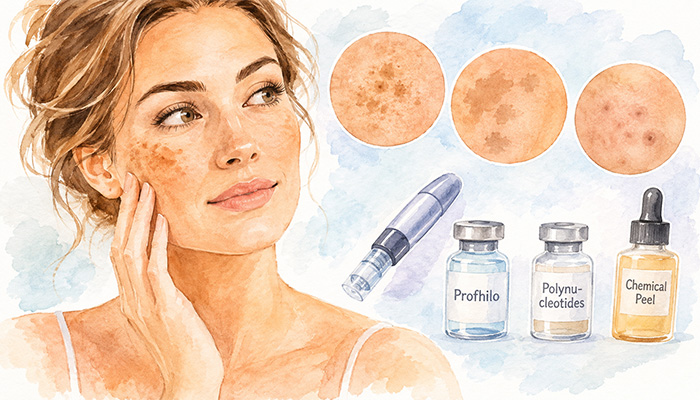
At Araya Skin Clinic, treatments such as microneedling, Profhilo, polynucleotides and professional chemical peels can form part of a personalised approach to improving skin quality and addressing uneven skin tone.
But which treatment is right for you? First, it helps to understand why pigmentation develops.
What causes skin pigmentation?
Skin pigmentation is caused by melanin, the natural pigment responsible for giving your skin its colour. Melanin is produced by specialised cells called melanocytes, which help protect the skin against ultraviolet (UV) radiation.
Sometimes, these cells produce too much melanin or distribute it unevenly, resulting in darker patches or spots.
There are several reasons why this can happen.
Sun exposure and age spots
One of the most common causes of pigmentation is prolonged exposure to sunlight. UV radiation stimulates melanin production, and repeated exposure over the years can lead to sun spots, also known as age spots or solar lentigines.
These typically appear as small, flat brown patches on areas regularly exposed to sunlight, including the face, hands, chest and shoulders.
Melasma and hormonal changes
Melasma is a form of pigmentation that often appears as larger, irregular brown or greyish-brown patches, particularly across the cheeks, forehead, upper lip and nose.
It is frequently associated with hormonal changes, including pregnancy and hormonal contraception, although sun exposure is also a significant trigger.
Melasma can be particularly persistent and may become darker during the summer months.
Post-inflammatory hyperpigmentation
Have you ever noticed a dark mark remaining after a spot, acne breakout, insect bite or skin irritation has healed?
This is known as post-inflammatory hyperpigmentation (PIH). It occurs when inflammation triggers an increase in melanin production, leaving a darker area behind.
It can affect all skin types but is particularly common and sometimes more noticeable in people with darker skin tones.
Ageing and changes in skin texture
As skin ages, previous sun damage and accumulated environmental exposure can become increasingly visible. Pigmented areas may appear alongside fine lines, dryness, loss of elasticity and uneven texture.
This combination can make the complexion look tired or less luminous than it once did.
Which aesthetic treatments can help with pigmentation?
There is no single treatment that works for every type of pigmentation. The most appropriate approach depends on the underlying cause, your skin type, the depth of the pigmentation and your overall skin condition.
At Araya Skin Clinic, several treatments can be considered as part of a tailored skin rejuvenation programme.
1. Microneedling: Encouraging skin renewal
Microneedling is a popular skin rejuvenation treatment that uses very fine needles to create controlled microscopic channels in the skin.
This stimulates the skin’s natural repair processes and encourages collagen and elastin production, helping to improve skin texture, firmness and overall appearance.
How can microneedling help with pigmentation?
Microneedling can help improve the appearance of certain types of pigmentation by encouraging skin renewal and supporting a more even-looking complexion.
It may be particularly useful for:
- Post-inflammatory hyperpigmentation left behind by acne or blemishes.
- Uneven skin tone and dullness.
- Sun-damaged skin and superficial pigmentation.
- Pigmentation accompanied by rough texture or enlarged pores.
Microneedling can also be combined with suitable professional skin treatments to support skin rejuvenation.
However, it is important to approach pigmentation carefully. Excessive inflammation or inappropriate treatment settings can actually make pigmentation worse, particularly in darker skin tones or people prone to melasma.
A professional assessment is therefore essential before treatment.
2. Profhilo: Improving hydration and skin quality
Although Profhilo is not specifically a pigmentation treatment, it can be a valuable addition to a skin rejuvenation programme.
Profhilo is an injectable treatment containing a high concentration of hyaluronic acid, a substance naturally found in the body that helps maintain skin hydration.
Unlike traditional dermal fillers, which are primarily used to restore volume or enhance facial contours, Profhilo works through a process known as bio-remodelling.
It helps improve skin hydration, elasticity and firmness, giving the complexion a fresher, smoother and more luminous appearance.
How can Profhilo help if you have pigmentation?
Profhilo does not directly remove excess melanin or fade established pigmentation. However, it can improve the overall appearance and quality of the surrounding skin.
Potential benefits include:
- Improving skin hydration and suppleness.
- Supporting skin elasticity and firmness.
- Softening the appearance of fine lines.
- Improving overall skin luminosity.
- Helping tired-looking skin appear fresher and healthier.
For someone concerned about both uneven skin tone and ageing, Profhilo may complement other treatments that more directly target pigmentation.
3. Polynucleotides: Supporting skin regeneration
Polynucleotides are an increasingly popular development in aesthetic medicine, offering another approach to improving skin quality.
They are purified DNA-derived molecules that are used in injectable regenerative treatments. They are designed to support the skin’s natural repair processes and improve the overall skin environment.
Rather than simply adding hydration, polynucleotides are used to support tissue regeneration and improve the appearance of skin that has become thin, tired or damaged.
Can polynucleotides improve pigmentation?
Polynucleotides are not primarily pigment-removal treatments, but they may complement a wider programme designed to improve uneven-looking skin.
Their potential benefits include:
- Supporting skin repair and regeneration.
- Improving skin texture and elasticity.
- Helping improve the appearance of fine lines.
- Supporting hydration and overall skin quality.
- Improving the appearance of delicate, crepey skin.
They may be particularly worth considering when pigmentation is accompanied by other concerns, such as thinning skin, loss of elasticity or a generally tired complexion.
At Araya Skin Clinic, polynucleotide treatments can also be combined with microneedling as part of a tailored skin rejuvenation approach.
4. Chemical peels: Targeting uneven skin tone
If your main concern is pigmentation, a professional chemical peel may be one of the more direct treatment options to consider.
Chemical peels use carefully selected acids to exfoliate the skin and encourage the removal of dead and damaged surface cells.
Depending on the formulation and strength, a peel can help improve skin clarity, texture and the appearance of superficial pigmentation.
At Araya Skin Clinic, we offer professional AlumierMD chemical peels, designed to address a range of skin concerns.
How can a chemical peel help with pigmentation?
Chemical peels can be particularly helpful for certain types of superficial pigmentation and uneven skin tone.
Potential benefits include:
- Reducing the appearance of superficial sun damage.
- Improving the appearance of post-inflammatory pigmentation.
- Helping to brighten dull, uneven skin.
- Smoothing rough skin texture.
- Improving the appearance of acne-related marks.
- Encouraging a fresher, more radiant complexion.
The strength and type of peel will depend on your skin condition and treatment goals.
A course of treatments may be recommended rather than relying on a single session, particularly where pigmentation is more established.
It is important to remember that stronger peels are not necessarily better. An unsuitable peel can irritate the skin and potentially trigger further pigmentation, so professional assessment and appropriate aftercare are essential.
Which treatment is best for pigmentation?
Choosing the right treatment depends on what is causing your pigmentation and whether you have other skin concerns you would also like to address.
Here is a simple guide:
| Treatment | Main benefits | Potential role in pigmentation |
|---|---|---|
| Microneedling | Collagen stimulation and skin renewal | Can improve the appearance of certain types of pigmentation |
| Profhilo | Deep hydration and bio-remodelling | Improves overall skin quality and luminosity rather than removing pigment |
| Polynucleotides | Skin regeneration and repair | Supports healthier-looking skin but is not a direct pigmentation treatment |
| Chemical peels | Exfoliation and resurfacing | Can directly improve the appearance of superficial pigmentation |
In some cases, combining treatments may provide a more comprehensive approach. For example, a chemical peel may be used to target superficial pigmentation, while Profhilo or polynucleotides can help address concerns about hydration, elasticity and skin quality.
However, combining treatments is not always appropriate. Your treatment plan should be based on your skin’s individual needs, with suitable intervals between procedures.
Looking after pigmented skin at home
Professional treatments can make a difference, but maintaining the results requires a consistent skincare routine.
One of the most important steps is protecting your skin from the sun.
Make SPF part of your daily routine
UV exposure can worsen existing pigmentation and trigger further melanin production. Apply a broad-spectrum SPF 30 or higher every day, with SPF 50 often a sensible choice for pigmentation-prone skin, particularly when outdoors.
For melasma, a tinted sunscreen containing iron oxides may provide additional protection against visible light, which can also contribute to pigmentation.
Choose skincare ingredients carefully
Certain skincare ingredients can help improve uneven skin tone when used appropriately.
These include:
- Vitamin C, an antioxidant that can help brighten the complexion.
- Niacinamide, which can help improve uneven skin tone and support the skin barrier.
- Azelaic acid, which can help address certain forms of hyperpigmentation.
- Retinoids, which encourage skin cell turnover and may improve pigmentation over time.
It is important to introduce active ingredients gradually and avoid over-exfoliating, as irritation can make pigmentation worse.
Be patient and consistent
Pigmentation rarely disappears overnight. Depending on its cause and depth, improvement can take several weeks or months, and some conditions, particularly melasma, require ongoing management.
Even after successful treatment, pigmentation can return, especially with further sun exposure.
When should you seek professional advice?
Not every dark mark or patch on the skin is pigmentation caused by sun exposure or ageing.
If you notice a new or changing pigmented mark, particularly one that changes in size, shape or colour, becomes itchy or bleeds, seek assessment from your GP or a dermatologist before considering cosmetic treatment.
For established pigmentation, a professional skin consultation can help identify the likely cause and determine which treatments are suitable for your skin type.
This is particularly important for melasma and post-inflammatory hyperpigmentation, where an inappropriate treatment can make the problem worse.
Discover a clearer, more radiant complexion at Araya Skin Clinic
Pigmentation can be frustrating, but there are several ways to improve uneven skin tone and restore a brighter, healthier-looking complexion.
Whether you are concerned about sun spots, acne marks, melasma or general dullness, the first step is understanding what is happening within your skin.
At Araya Skin Clinic, we offer a range of advanced aesthetic treatments, including microneedling, Profhilo, polynucleotides and AlumierMD chemical peels.
Our approach is centred on understanding your individual skin concerns and recommending treatments that are appropriate for your needs.
To see more visit the Association of British Dermatologists
Ready to take the next step towards healthier-looking skin?
Book a consultation with Araya Skin Clinic to discuss your pigmentation concerns and discover a personalised treatment approach.
Your journey towards a brighter, more even-looking complexion starts here.